Skip to content
Someone accountable when it breaks at 2am

Managed application services & L1–L3 support

Tiered L1–L3 application support, cloud operations, monitoring and continuous improvement under defined SLAs — with a transition process designed to capture knowledge before it walks out of the door.

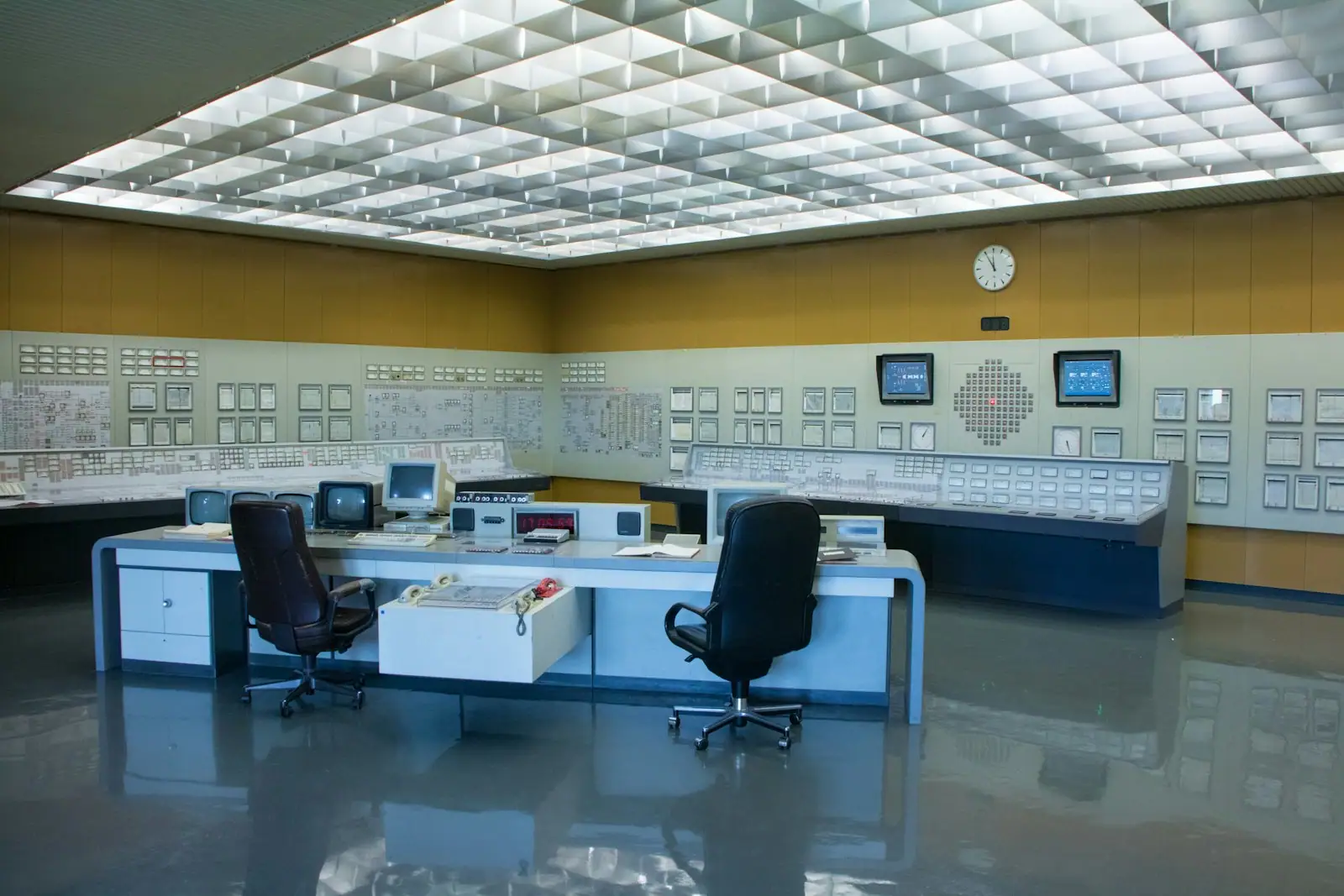
Network operations centre with engineers monitoring application dashboards

Applications do not become someone else's problem the day they go live. They accumulate tickets, drift out of patch compliance, develop undocumented dependencies, and end up understood by one person who is now the single point of failure for the business.

Managed application services means we take that on, under an SLA, with the knowledge captured in a form that survives staff changes. Tiered support, proactive monitoring, a proper release process for enhancements, and a continuous improvement loop aimed at reducing ticket volume rather than servicing it forever.

What we measure

These are the measures we baseline at the start and report on throughout — not results claimed in advance.

SLA attainment
Percentage of incidents meeting agreed response and resolution targets by severity, reported monthly with every breach explained.
First-contact resolution
Share of tickets closed at L1 without escalation — the clearest measure of whether knowledge transfer actually worked.
Ticket volume trend
Total volume over time, split by root cause. A flat line means we are servicing problems instead of fixing them.
Change success rate
Percentage of releases deployed without rollback or emergency fix, tracked alongside deployment frequency.
What's included

Capabilities within managed application services

Tiered Application Support (L1–L3)

A structured support model with defined scope at each tier and escalation paths that are written down rather than improvised under pressure.

  • L1 — first response, triage, known-error resolution, user guidance
  • L2 — functional analysis, configuration fixes, data correction
  • L3 — code-level debugging, defect fixes, vendor escalation
  • Severity-based SLAs with escalation and communication protocols
  • Extended-hours or follow-the-sun cover via US and India teams
Transition & Knowledge Capture

A structured takeover that gets knowledge out of individuals and into documentation before the incumbent team is gone.

  • Shadowing and reverse-shadowing with the outgoing team
  • Application, integration and dependency documentation
  • Known-error database and resolution runbook build
  • Access, tooling and environment handover
  • Phased responsibility transfer with defined exit criteria

Enhancement & Release Management

Small changes delivered continuously under proper change control, so the application keeps improving instead of slowly ossifying.

  • Backlog grooming and prioritisation with your product owner
  • Enhancement development within an agreed monthly capacity
  • Regression testing before every release
  • Change advisory board participation and approval workflow
  • Release notes and user communication

Cloud & Infrastructure Operations

Running the platform the application sits on — patched, backed up, cost-governed and recoverable.

  • Environment management across dev, test and production
  • Patching, upgrades and vulnerability remediation
  • Backup verification and disaster recovery testing
  • Cost monitoring, rightsizing and FinOps reporting
  • Infrastructure as code maintenance

Monitoring & Observability

Finding out from a dashboard rather than from a user — instrumentation, alerting and the discipline to keep alerts meaningful.

  • Application performance monitoring and distributed tracing
  • Log aggregation, retention and correlation
  • Synthetic transaction monitoring on critical journeys
  • Alert tuning to keep signal-to-noise usable
  • Capacity trending and proactive scaling recommendations

Security & Compliance Operations

Keeping the estate patched, access controlled and audit evidence available without a scramble when the auditor arrives.

  • Vulnerability scanning and patch cadence management
  • Access review, provisioning and deprovisioning
  • Audit evidence collection and control reporting
  • Security incident response procedures
  • Dependency and supply-chain monitoring
Our approach

How an engagement runs

Five phases, each with deliverables you can point at. No phase ends on a status report alone.

  1. 01

    Assess & scope

    Understand the estate before committing to an SLA — application inventory, ticket history, architecture and where the undocumented knowledge lives.

    Deliverables

    • Application and integration inventory
    • Historical ticket volume and root-cause analysis
    • Risk assessment covering single points of failure
    • Proposed support model, tiering and SLA framework
  2. 02

    Transition

    A phased takeover — typically ninety days — moving from shadowing to reverse-shadowing to full ownership, with exit criteria at every gate.

    Deliverables

    • Transition plan with phase gates and exit criteria
    • Documentation set and known-error database
    • Runbooks for the top ticket categories by volume
    • Tooling, monitoring and access fully established
  3. 03

    Stabilise

    First months of live ownership focused on hitting SLA consistently and eliminating the recurring incidents inherited from before.

    Deliverables

    • SLA performance reporting from month one
    • Top recurring incidents identified and permanently fixed
    • Monitoring and alert tuning based on real traffic
    • Refined runbooks reflecting what actually happens
  4. 04

    Operate

    Steady-state support and enhancement delivery, with monthly service reviews where the numbers are presented whether or not they are flattering.

    Deliverables

    • Monthly service review with SLA and trend reporting
    • Enhancement delivery within agreed capacity
    • Proactive maintenance and patch cadence
    • Quarterly risk and architecture review
  5. 05

    Improve

    A standing objective to reduce ticket volume and technical debt, so the service gets cheaper and more stable over time rather than the reverse.

    Deliverables

    • Root-cause analysis programme targeting top ticket drivers
    • Automation of repetitive support tasks
    • Technical debt register with a prioritised remediation plan
    • Modernisation recommendations with a business case
Engagement models

How you can contract this

Different problems want different commercial shapes. We will tell you which one fits, including when it is the cheapest one.

Support only

Incident and request handling under SLA, with no enhancement capacity included.

Best for
Stable applications in maintenance mode
Commercials
Monthly fee by application count and cover hours

Support + enhancement

Support under SLA plus a fixed monthly capacity for enhancements and small changes.

Best for
Applications that still need to evolve
Commercials
Monthly fee plus a banked enhancement capacity

Full application ownership

End-to-end ownership including infrastructure, security operations and the roadmap.

Best for
Non-core applications you would rather not staff internally
Commercials
Monthly fee against a defined service catalogue

Managed capacity

A dedicated team covering whatever mix of support, enhancement and project work you need that month.

Best for
A portfolio with a shifting balance of work
Commercials
Monthly team rate with a transparent effort split
Technology

What we work with

We pick tools to fit your existing estate and your team's ability to maintain them, not to fit our preferences.

ITSM

  • ServiceNow
  • Jira Service Management
  • Zendesk
  • Freshservice

Monitoring

  • Datadog
  • New Relic
  • Grafana
  • Prometheus
  • Azure Monitor
  • CloudWatch

Cloud

  • AWS
  • Azure
  • Google Cloud
  • Terraform
  • Kubernetes

Platforms supported

  • ServiceNow
  • Salesforce
  • .NET
  • Java
  • Node.js
  • Python

CI/CD

  • GitHub Actions
  • Azure DevOps
  • GitLab CI
  • Jenkins

Security

  • Snyk
  • Dependabot
  • Qualys
  • SonarQube
FAQ

Questions we get asked

What SLAs do you commit to?

SLAs are agreed per engagement against your actual business impact, because a P1 for a trading platform is not a P1 for an internal expense tool. A representative framework — severity definitions, response and resolution targets — is published on this page as a starting point for that conversation, not as a fixed offer.

How do you take over an application nobody documented?

This is the normal case, not the exception. Transition allocates explicit time to discovery: shadowing the people who know it, tracing the code and integrations, and mining ticket history for the real failure modes. We build the documentation as part of transition and you keep it, including if you later move to another provider.

Do you offer 24/7 support?

Yes, through the US and India teams, though we will ask whether you genuinely need it. Round-the-clock cover on an application whose users are all in one time zone is often money better spent on fixing what causes the out-of-hours calls.

What if we want to bring support back in-house later?

The documentation, runbooks and known-error database are yours throughout, not held as leverage. Exit assistance is written into the contract from the start. An AMS provider that makes leaving difficult is solving their retention problem with your risk.

How do you price managed services?

Usually a monthly fee based on application count, complexity, ticket volume and cover hours, with enhancement capacity banked separately so support and change do not compete. We size it from your actual ticket history during assessment rather than from a generic tier card.

Let's talk about what you're trying to build.

A short conversation is usually enough to tell whether we're the right fit. If we're not, we'll say so and point you somewhere better.

Or email us directly at reachus@segakiv.com